 Back to all Resources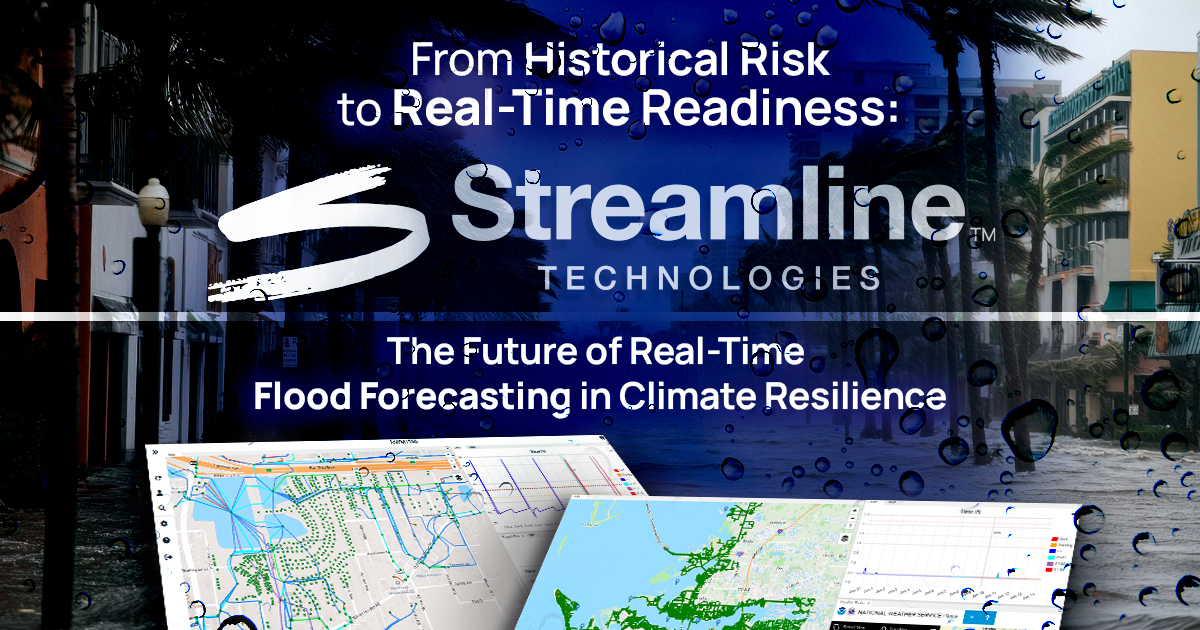
In an era of intensifying flood risk, we examine how real-time flood forecasting is reshaping public safety, infrastructure planning, and proactive response, delivering the actionable intelligence communities need to anticipate impacts, protect infrastructure, and strengthen climate resilience in 2026 and beyond.
Flood risk management stands at a pivotal crossroads. Intensifying rainfall, shifting weather patterns, and compounding climate stresses are fundamentally changing how and where flooding occurs. Events once considered rare are becoming increasingly frequent, and areas historically viewed as low risk are now experiencing damaging floods with little warning. For municipalities, emergency response teams, and flood management professionals, this new reality demands a shift from reactive response to proactive, intelligence-driven preparedness.
Flood forecasting is no longer a future-facing aspiration. It’s a present-day necessity and a cornerstone of climate resilience. Understanding how modern flood forecasting works, how it differs from traditional modeling approaches, and why real-time insight is critical can mean the difference between controlled response and catastrophic impact.
Understanding Flood Forecasting in a Shifting Climate
Flood forecasting is the simulation of when, where, and how flooding will occur before it happens. Unlike traditional flood modeling, which often relies on static assumptions, historical rainfall patterns, and single-event analyses, flood forecasting is dynamic. It continuously integrates observed and forecasted rainfall, hydrologic conditions, river and coastal influences, and system performance to anticipate flood impacts several days in advance.
This distinction matters more than ever. As the global water cycle intensifies and air temperatures rise, the atmosphere holds more moisture, resulting in heavier downpours that overwhelm drainage systems and waterways. Altered weather patterns are driving more powerful storm systems, including atmospheric rivers that deliver extraordinary volumes of rainfall over short periods. At the same time, prolonged droughts can dry out soil, reducing its ability to absorb water when intense storms arrive. The result is a volatile cycle of sudden, destructive flooding.
Now, as extreme weather events occur with increasing regularity, communities can no longer rely solely on past conditions to predict future risks. Real-time flood forecasting addresses this by focusing on what will occur in the days ahead.
Why Real-Time Forecasting Is Critical for Public Safety and Economic Protection
Real-time flood forecasting transforms data into actionable intelligence. By continuously processing rainfall data, gauge networks, river and reservoir levels, as well as forecasted weather inputs, modern systems can project flood depth, location, and duration several days in advance. This extended lead time is critical for community safety and economic resilience.
For emergency managers and first responders, early awareness enables targeted, timely action. Roads can be closed before they become impassable, evacuation orders can be issued with confidence, and resources can be staged where impacts are expected, not after damage has already occurred. Transportation networks, which are often among the first systems disrupted by flooding, can be actively managed to preserve access for emergency vehicles as well as the public.
For municipalities, forecasting provides unforeseen foresight. Understanding how changing rainfall patterns affect bridges, roads, utilities, and stormwater systems allows agencies to protect assets before damage escalates. Over time, these insights inform smarter design, capital planning, and land-use decisions that reflect evolving flood risks.
Beyond immediate response, real-time forecasting plays a vital role in protecting public health and the environment. Accurate forecasts can support proactive management of urban drainage systems, helping reduce sewer overflows and contamination risks in floodwaters. Forecasts also assist in balancing water resource needs, from portable pump operations to habitat protection, during extreme events.
Flood Forecasting as a Foundation for Climate Resilience
True resilience extends beyond emergency response. It requires integrating climate risk into everyday planning and long-term decision-making. Advanced flood forecasting supports this shift by providing a clearer understanding of how future storms may interact with today’s infrastructure and landscapes.
By visualizing flood impacts at the street, house, and critical infrastructure level, communities gain a practical lens into their vulnerabilities. This impact-based perspective translates risk into real-world consequences for people, property, and services, and enables leaders to prioritize investments, strengthen vulnerable corridors, and align resilience strategies with the realities of intensifying rainfall and compound flooding.
As flood risk management evolves, several trends are shaping the future of the field. Artificial intelligence and machine learning are playing a central role in transforming how flooding impacts are visualized and communicated, while high-resolution data sources, including LiDAR and satellite imagery, support the localized identification of flood extents and infrastructure impacts via the use of Flood Risk Points™. Furthermore, advanced modeling and data-driven techniques deliver more reliable forecasts, while real-time forecasting ensures that insights remain timely and actionable for key decision-makers.
Turning Forecasts into Actionable Intelligence
In this evolving landscape, FloodWise™ stands as a powerful example of how real-time flood forecasting can be operationalized to support resilience at every level. Designed to run continuously, FloodWise™ integrates forecasted and observed rainfall, coastal and inland influences, and existing hydraulic and hydrologic models to deliver reliable, real-time flood intelligence.
FloodWise™ forecasts flooding at the street, house, and critical infrastructure level several days in advance, providing clarity when it matters most. The system leverages AI and deep learning to develop detailed representations of buildings, roads, bridges, and utilities, enabling precise visualization of potential impacts. These insights help emergency response teams allocate resources effectively, guide public communication, and initiate protective actions before flooding escalates.
The platform’s flexibility allows communities to leverage existing modeling investments while enhancing them with real-time forecasting capabilities. Continuous operation ensures that changing conditions are always reflected, while secure, easy access across devices supports coordination among engineers, emergency managers, and key decision-makers. Integrated “what if” scenario analysis further empowers users to test assumptions, evaluate mitigation strategies, and plan for future events with confidence.
FloodWise™ also supports compound flooding analysis by incorporating coastal and ocean forecast data, recognizing that many communities face overlapping risks from rainfall, rivers, and storm surge. This comprehensive perspective is essential as climate-driven extremes increasingly blur the lines between inland and coastal flooding.
Looking Ahead: Building Safer, Smarter Communities
The path forward for flood risk management remains clear. The increasing frequency and intensity of extreme storm events demand tools that are proactive, data-driven, and grounded in real-time insight. Flood forecasting is no longer optional; it is a critical capability for protecting lives, safeguarding infrastructure, and sustaining economic stability in an ever-evolving climate.
By embracing advanced real-time forecasting solutions, municipalities and emergency response teams can move from reacting to floods after they occur to anticipating impacts before they unfold. In doing so, they embed resilience into daily operations and long-term planning, ensuring communities are better prepared for whatever the next storm brings.
FloodWise™ reflects this forward-looking approach, empowering professionals with the intelligence they need to forecast, prepare for, and mitigate flooding in an increasingly uncertain world. The question facing communities today is no longer whether flooding will occur, but whether they will have the insight to act in time.
Contact our team today to learn how FloodWise™ empowers municipalities, emergency response teams, and flood management professionals to anticipate impacts, protect infrastructure, and act with confidence through advanced flood forecasting insights!
TAGS
Blogs

